Meat
Ingredient Profile & Cooking Guide
💡 Beef is often regarded as the centerpiece of culinary arts. Its versatility comes from the vast differences in texture and flavor profiles found throughout the various "primals" or cuts of the animal.
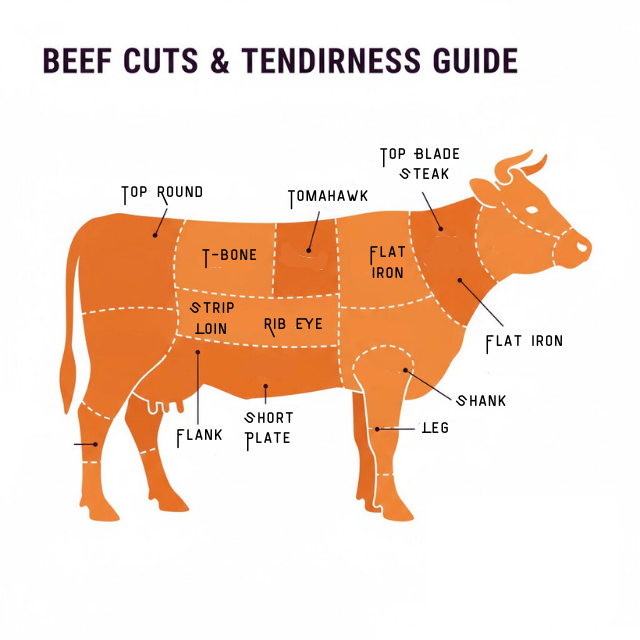
Anatomy of Flavor: Understanding Cuts
Primary Tender Cuts: Cuts like the Tenderloin (Filet Mignon) and Loin come from muscles that do little work. They are lean and tender, best suited for quick, dry-heat methods like searing or grilling.
The Rib Section: Known for Ribeye steaks, this area has significant marbling (intramuscular fat), providing the richest flavor and a juicy mouthfeel.
Hard-working Muscles (Tough Cuts): Parts like the Shank, Chuck, and Brisket are rich in connective tissue (collagen). These require "low and slow" cooking methods, such as braising or smoking, to break down the fibers into tender, gelatinous goodness.
2. Sensory Profile
Intense Savory Flavor: Beef has a high concentration of glutamates, providing a deep umami base. This is further intensified in "Dry-Aged" beef, where moisture loss concentrates the flavor.
Marbling Scores: In the culinary industry, the amount of white fat specks within the red meat (marbling) is a key indicator of quality and grade (e.g., USDA Prime or Japanese A5 Wagyu).
3. Essential Culinary Techniques
Maillard Reaction: Achieving a dark, crusty sear on the outside of the beef creates hundreds of different flavor compounds that don't exist in raw meat.
Cutting Against the Grain: Identifying the direction of the muscle fibers and slicing perpendicular to them is crucial for ensuring a tender bite, especially in fibrous cuts like Flank or Skirt steak.
The Importance of Resting: Resting allows the internal muscle fibers to relax and reabsorb juices. Cutting too early results in a dry piece of meat and a puddle of juice on the plate.
Primary Tender Cuts: Cuts like the Tenderloin (Filet Mignon) and Loin come from muscles that do little work. They are lean and tender, best suited for quick, dry-heat methods like searing or grilling.
The Rib Section: Known for Ribeye steaks, this area has significant marbling (intramuscular fat), providing the richest flavor and a juicy mouthfeel.
Hard-working Muscles (Tough Cuts): Parts like the Shank, Chuck, and Brisket are rich in connective tissue (collagen). These require "low and slow" cooking methods, such as braising or smoking, to break down the fibers into tender, gelatinous goodness.
2. Sensory Profile
Intense Savory Flavor: Beef has a high concentration of glutamates, providing a deep umami base. This is further intensified in "Dry-Aged" beef, where moisture loss concentrates the flavor.
Marbling Scores: In the culinary industry, the amount of white fat specks within the red meat (marbling) is a key indicator of quality and grade (e.g., USDA Prime or Japanese A5 Wagyu).
3. Essential Culinary Techniques
Maillard Reaction: Achieving a dark, crusty sear on the outside of the beef creates hundreds of different flavor compounds that don't exist in raw meat.
Cutting Against the Grain: Identifying the direction of the muscle fibers and slicing perpendicular to them is crucial for ensuring a tender bite, especially in fibrous cuts like Flank or Skirt steak.
The Importance of Resting: Resting allows the internal muscle fibers to relax and reabsorb juices. Cutting too early results in a dry piece of meat and a puddle of juice on the plate.